
The Search Game Just Changed: Why Your Website Needs to Speak AI Language
Remember the last time you asked ChatGPT a question instead of googling it? You’re not alone. Millions of people are swapping their “10 blue links” habit for direct AI conversations, and this shift is quietly reshaping how websites get discovered online.
I used to spend hours diving through search results, clicking link after link to piece together answers. Now? I ask my AI assistant and get what I need in seconds. This change feels personal, but it’s actually part of a massive transformation that every website owner needs to understand.
Your beautiful, keyword-optimized content might be invisible to the AI systems that increasingly control how people find information. But here’s the thing – with the right approach, you can actually get more visibility than ever before.
AI Search is Taking Over Traditional Google Results
How ChatGPT and Google’s AI overviews are changing search behaviour
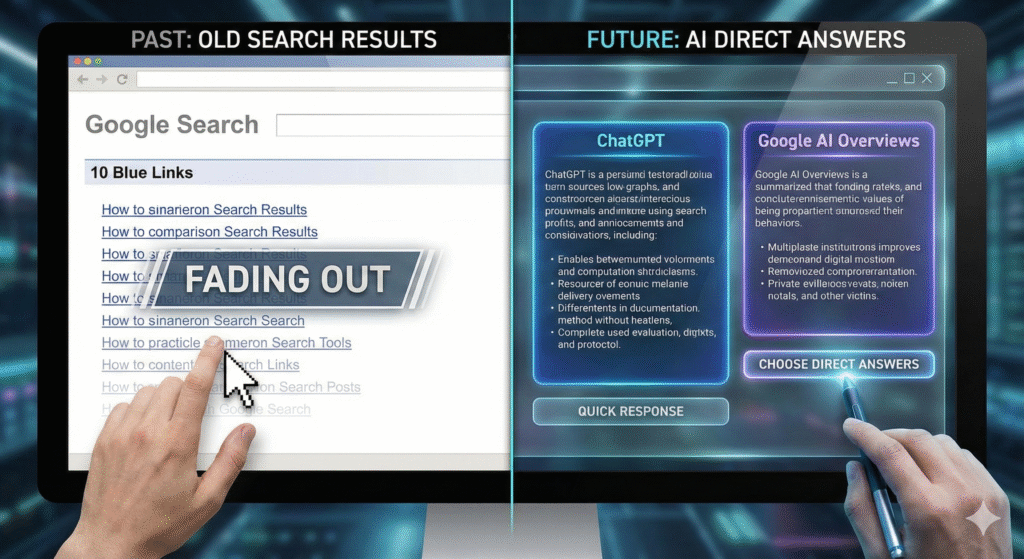
Last month, my neighbour asked me how to fix her leaky faucet. Instead of opening Google, she opened ChatGPT. “It’s just easier,” she said. “I get the steps right away without clicking through five different plumbing websites.”
She’s part of a growing trend. Studies show that people are using AI chatbots for everything from cooking tips to complex business advice. ChatGPT sees over 100 million weekly active users, and many of them use it as their primary search tool.
Google noticed this shift and launched AI Overviews – those AI-generated summaries that appear at the top of search results. When you search for “how to make sourdough bread,” you now see a complete recipe overview before any website links. This means people get their answers without ever visiting your carefully crafted blog post.
Why people prefer direct answers over clicking through links
Think about your own search habits. When you need a quick answer, do you want to read through a 2,000-word article, or do you just want the specific information you need?
AI search satisfies our craving for efficiency. Instead of:
- Opening multiple tabs
- Scanning through lengthy introductions
- Dealing with pop-ups and ads
- Comparing information across different sites
People now get comprehensive answers in one place. It’s like having a knowledgeable friend who’s read everything on the internet and can give you the exact information you need.
The death of the “10 blue links” search page format
The classic Google results page is becoming less relevant every day. Google’s own data shows that AI Overviews appear for over 15% of queries, and this number keeps growing.
I recently searched for “best time to plant tomatoes” and got a complete planting calendar right in the search results. I didn’t need to visit any of the gardening websites that probably spent months creating detailed planting guides. Their expertise was summarized and presented before I even saw their links.
This shift doesn’t mean websites are doomed, but it does mean the old playbook isn’t enough anymore.
What Makes AEO Different from Regular SEO
Answer Engine Optimization (AEO) is like SEO’s smarter cousin. While SEO focuses on ranking for keywords, AEO focuses on being the source that AI systems trust and reference.
Creating content that answers complete questions, not just keywords
Traditional SEO taught us to sprinkle keywords throughout our content. AEO requires a different approach – comprehensive answers that leave no questions unanswered.
When I write about “email marketing” now, I don’t just optimize for that phrase. I create content that answers:
- What is email marketing exactly?
- How does it work step-by-step?
- What tools do you need?
- What are common mistakes?
- How do you measure success?
AI systems love this approach because they can extract complete, useful information to share with users. Incomplete or shallow content gets ignored.
Writing for machines that need context and clarity
AI systems are smart, but they’re not mind readers. They need context to understand your content properly.
Instead of writing: “This technique increases conversions”
Write: “A/B testing email subject lines can increase email open rates by 25-30%, according to Campaign Monitor’s 2023 study”
The second version gives AI systems specific, citable information they can confidently share with users. It includes the what, the how much, and the source – everything an AI needs to provide a helpful response.
Building authority through comprehensive, factual information
AI systems prioritize authoritative sources. They’re more likely to reference content from sites that consistently provide accurate, well-researched information.
This means your random blog post about “cryptocurrency basics” probably won’t get AI mentions unless you’re already known as a crypto expert. But if you consistently publish detailed, factual content about crypto, backed by data and examples, AI systems start recognizing your site as a reliable source.
Building this authority takes time, but it’s worth it. Once AI systems trust your content, they’ll reference it across multiple related topics.
Getting Your Content Featured in ChatGPT Responses
Structuring content so AI can easily extract and cite information
AI systems scan content differently than humans do. They look for clear structure and extractable information. Here’s what works:
Use clear headings and subheadings. AI systems use these to understand your content’s organization.
Include specific data points. Instead of “many people,” write “67% of small business owners” with a source.
Create scannable lists. Bullet points and numbered lists make it easy for AI to extract key information.
Add source citations. When you reference studies or statistics, include the source and date. AI systems love this additional context.
Creating original research and data that AI systems reference
Original research is like catnip for AI systems. They constantly search for new, unique information to include in their responses.
You don’t need a million-dollar research budget. Simple surveys, case studies, or data analysis can work. Last year, I surveyed 500 small business owners about their social media challenges. That data got referenced in multiple AI responses because it was original and specific.
Even compiling existing information in new ways creates value. If you gather pricing data from 20 different software tools and create a comparison, that becomes original, referenceable content.
Building topical authority in your niche for consistent mentions
Topical authority isn’t about writing one great article – it’s about consistently covering your subject area with depth and expertise.
Pick 3-5 core topics related to your business and create comprehensive content around each one. If you’re a fitness coach, your topics might be:
- Strength training for beginners
- Nutrition for weight loss
- Home workout routines
- Exercise for specific age groups
- Injury prevention and recovery
Create multiple pieces of content for each topic, linking them together and updating them regularly. Over time, AI systems recognize you as a go-to source for these subjects.
Winning at Google’s AI Overviews and Gemini
Optimizing for featured snippets that feed AI summaries
Featured snippets are the foundation of many AI Overviews. If your content already appears in featured snippets, you’re halfway to AI visibility.
The key is answering questions directly and concisely. When someone searches “how long do batteries last,” they want a quick answer, not a 500-word introduction about battery technology.
Structure your answers like this:
- Lead with the direct answer
- Follow with supporting details
- Include relevant context
- Add actionable next steps
Creating content that directly answers search intent
Search intent goes beyond keywords – it’s about understanding what people really want to know.
When someone searches “best running shoes,” they might want:
- Product recommendations
- Buying advice
- Price comparisons
- Reviews and ratings
- Specific use cases (trail running, marathons, etc.)
Create content that addresses all these angles. AI systems prefer comprehensive resources over narrow, keyword-focused pages.
Using schema markup to help AI understand your content better
Schema markup is like providing a translator for AI systems. It explains what your content is about in language that machines understand perfectly.
For a restaurant, schema markup might indicate:
- Business hours
- Menu items and prices
- Location and contact info
- Customer reviews
- Special dietary options
This structured data helps AI systems extract accurate information to include in responses. When someone asks “Italian restaurants open late near me,” properly marked-up content has a better chance of being referenced.
Measuring Your AEO Success
Tracking mentions in AI responses across different platforms
Traditional analytics don’t capture AI mentions, so you need new approaches to measure success.
Start by manually checking AI responses for your key topics. Search for questions your content answers and see if your information appears in the results. Keep a simple spreadsheet tracking:
- Date checked
- Platform (ChatGPT, Google AI Overview, etc.)
- Topic or question
- Whether your content was mentioned
- Type of mention (direct quote, paraphrase, etc.)
Monitoring changes in organic traffic patterns
AEO impacts your traffic patterns in interesting ways. You might see:
- Decreased clicks from simple questions (people get answers directly)
- Increased clicks from complex queries (people want more detail)
- Higher-quality traffic (visitors who need deeper information)
- Longer session durations (engaged users who couldn’t find complete answers in AI responses)
Set up separate analytics segments to track these patterns and adjust your content strategy accordingly.
Setting up alerts for brand and content mentions in AI tools
Google Alerts can help track some AI mentions, but you’ll also need to actively monitor AI platforms.
Create alerts for:
- Your brand name
- Key employees or executives
- Unique research or data you’ve published
- Specific methodologies or frameworks you’ve created
Check AI responses weekly for your most important topics. This manual monitoring is tedious but necessary until better AI tracking tools become available.
Summary
Search is moving beyond traditional keyword rankings to AI-powered answers. Success now depends on creating comprehensive, authoritative content that AI systems can confidently reference and cite. Companies that adapt their content strategy to speak AI language will capture more visibility in this new search landscape.
The shift feels overwhelming, but it’s also an opportunity. While others cling to old SEO tactics, you can build the foundation for long-term AI visibility. Start with your best content, make it more comprehensive and AI-friendly, and gradually expand your approach.
The search game has changed, but the winners will be those who provide genuinely helpful, authoritative information – just like always.
Frequently Asked Questions
Q: Will traditional SEO become completely obsolete?
A: No, traditional SEO still matters, but it’s evolving. The fundamentals like quality content, page speed, and user experience remain important. AEO builds on these foundations rather than replacing them entirely.
Q: How do I know if my content is being used by AI systems?
A: Monitor your brand mentions in AI responses, track changes in organic traffic patterns, and set up Google Alerts for your content topics. Some tools are emerging to track AI visibility specifically.
Q: Do I need to rewrite all my existing content for AEO?
A: Start with your best-performing pages and most important topics. Focus on adding more comprehensive information, clearer structure, and direct answers to common questions rather than completely rewriting everything.
Q: How long does it take to see AEO results?
A: AI systems update their knowledge bases regularly, but it can take weeks to months for consistent mentions. Focus on building authority over time rather than expecting immediate results.
Q: Should I optimize for all AI platforms or focus on one?
A: Start with the platforms most relevant to your audience, but aim for content quality that works across multiple AI systems. Good AEO practices generally translate well between different AI platforms.
